In this article
- How much does brake pad replacement cost in Bristol?
- How do you know your brake pads need replacing?
- Can you keep driving with worn or grinding brakes?
- How long do brake pads last?
- Do you need new brake discs as well?
- Why is stop-start driving in Bristol hard on brakes?
- What does a brake pad replacement involve?
- How do you book brake pad replacement in Bristol with Garage Gaffer?
The short version
- Guides put front pads at £120 to £140 and rear pads at £110 to £130, parts and labour (Bumper, July 2026).
- Most pads last 30,000 to 70,000 miles, and stop-start driving wears them faster.
- Squealing is an early warning. Grinding, a spongy pedal or a longer stopping distance means stop driving.
- The DVSA treats pads worn below 1.5mm as a dangerous MOT defect.
- Discs can be reused with new pads if they're in good condition. Pads are priced per axle.
How much does brake pad replacement cost in Bristol?
Guides put front pads at £120 to £140 and rear pads at £110 to £130, parts and labour. Doing both axles together costs £230 to £300. These are Bumper's national averages for 2026, not Bristol-only prices.
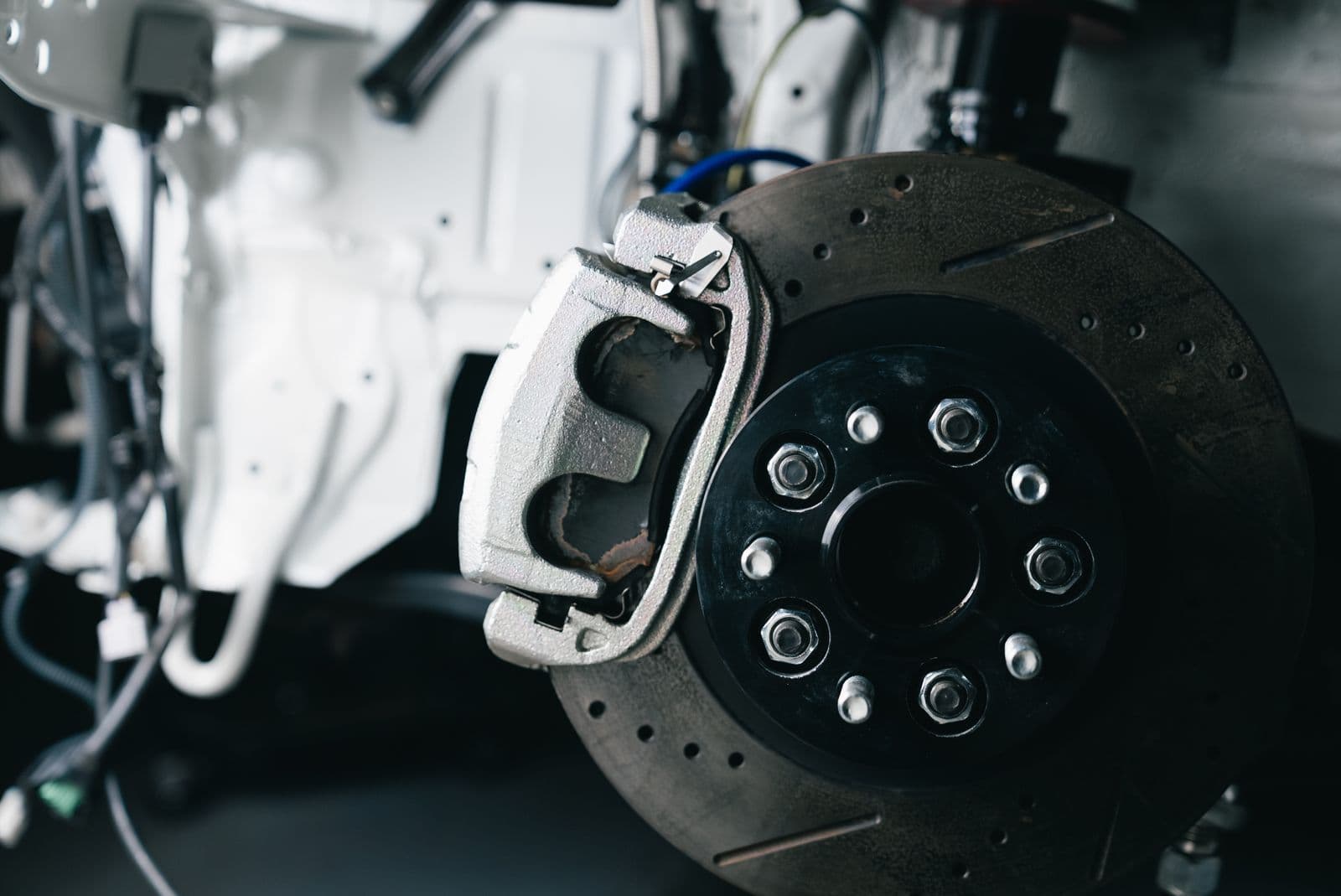
A pad is the friction block that presses on a disc, the metal plate that turns with each wheel, to slow the car. An axle is the pair of wheels at the front or the back.
| Job | Typical UK cost |
|---|---|
| Front pads | £120–£140 |
| Rear pads | £110–£130 |
| Front and rear together | £230–£300 |
Prices vary with the make and model and the quality of the pads. Local labour rates matter too, as does whether you use an independent garage or a main dealer. Discs, if they need replacing, cost extra.
Pads are fitted by the axle, so both wheels at the front or the back get new pads together. Garage Gaffer prices brake pad replacement per axle, and you see your exact labour price when you enter your reg. Parts are quoted separately.
How do you know your brake pads need replacing?
Listen and feel for squealing, grinding, vibration through the pedal, pulling to one side, a spongy pedal or a longer stopping distance. The AA lists all of these. Bumper adds a brake warning light.
| Sign | What it can mean |
|---|---|
| Squealing | The wear indicator is designed to screech when the pads run low. A stone caught in the brake can do it too. |
| Grinding or scraping | The pad material is probably gone, so metal is rubbing on metal. It can also damage the discs. |
| Vibration through the wheel or pedal | Worn or warped parts. |
| Pulling to one side | A sticking caliper or a collapsed brake hose. Uneven tyre wear or alignment can also cause it. |
| A spongy pedal | Air in the system, a worn hose or a leak. |
| A longer stopping distance | A serious safety concern that needs immediate attention. |
A brake warning light can have several causes, so don't assume it means worn pads. The DVSA says a lit wear indicator on its own isn't an MOT failure, but get it checked anyway.
Pulling to one side can follow a hard hit on a pothole. Our guide to pothole damage in Bristol covers what to look for. Garage Gaffer doesn't fit tyres or do wheel alignment, so see a tyre specialist if those are the cause.
Can you keep driving with worn or grinding brakes?
Not if they grind. The AA says that if you hear grinding or scraping, don't drive any further until the brakes have been checked. Metal on metal can damage the discs as well.
“Squealing is the early warning. Grinding means stop.”
Squealing is different. Book a check this week, and don't wait until it turns into grinding. These signs also need a check soon:
- Vibration through the pedal or wheel. The AA says it means worn or warped parts.
- Pulling to one side. Brakes are one cause, but not the only one.
How long do brake pads last?
Most pads last between 30,000 and 70,000 miles, according to Bumper's guide, updated 20 July 2026. Frequent city stop-start driving wears them faster than motorway driving.
30k–70k
miles most brake pads last (Bumper, updated 20 July 2026)
1.5mm
a pad worn below this is a dangerous defect in the DVSA's MOT manual (updated 14 October 2026)
That range is wide because it depends on how and where you drive, and on the car. Two cars with the same mileage can have different wear, so thickness is a better test than the odometer.
The DVSA's MOT manual treats a pad worn down to its wear indicator as a major defect, and one worn below 1.5mm as dangerous.
Our guide to common MOT failures explains what major and dangerous mean, and what happens after a fail.
Do you need new brake discs as well?
Not always. Bumper says discs can be reused with new pads if they're in good condition, though replacing both together is often recommended.
Discs are usually replaced by the axle, so both front discs or both rear discs go together. Bumper's disc guide, updated 22 July 2026, puts disc replacement from about £130 per axle, rising for larger or premium cars.
Ignoring a grinding noise is how a pad job can grow into a pads-and-discs job. The DVSA's MOT manual calls a disc that's significantly and obviously worn a major defect. Wear below the manufacturer's limit alone isn't a reason to fail. A disc that's insecure, fractured or likely to fail is dangerous.
Garage Gaffer lists Brake Disc Replacement as disc and pad replacement for worn or warped discs, priced per axle. You can see it in the services list.
Why is stop-start driving in Bristol hard on brakes?
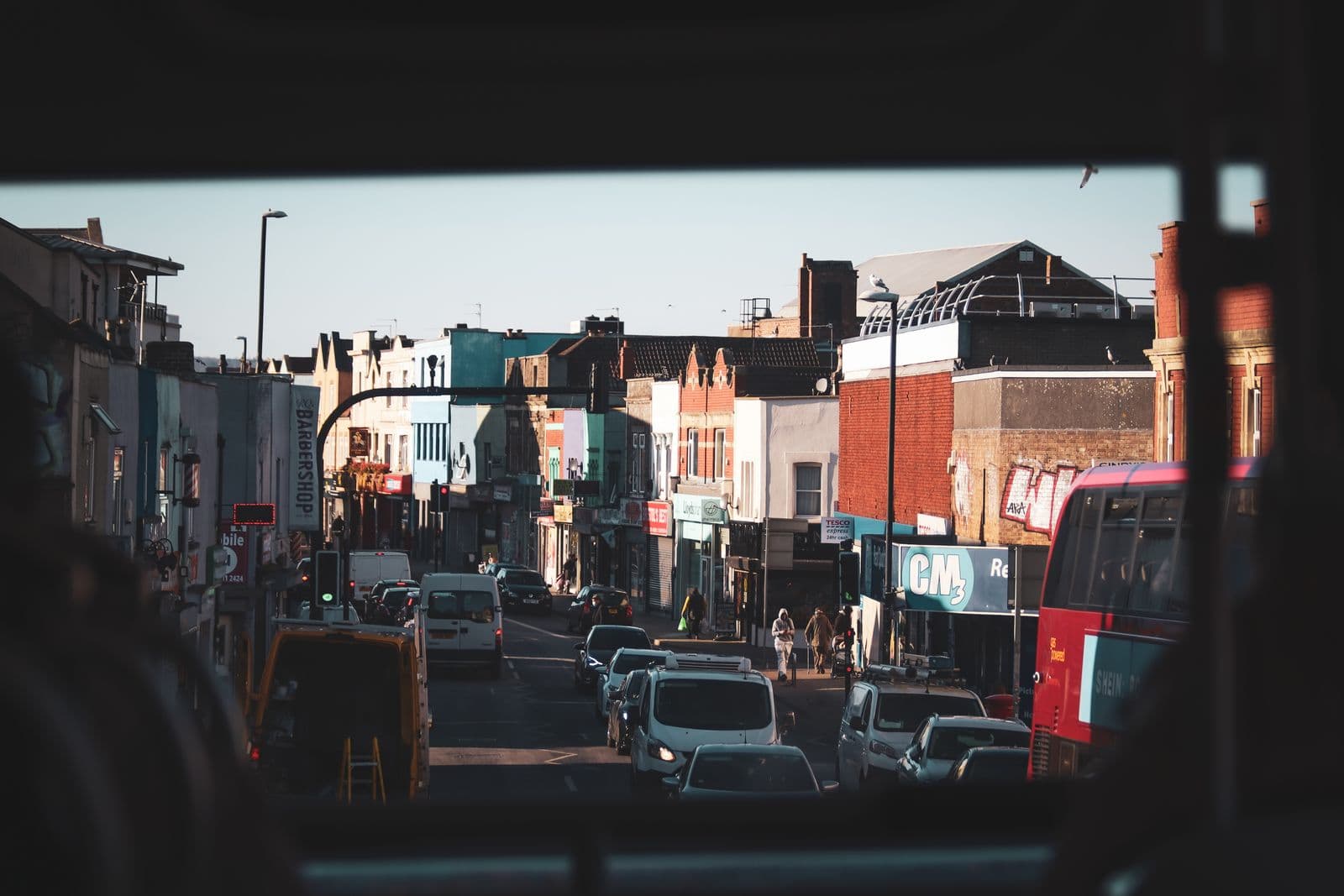
City driving means more braking, and Bumper says frequent stop-start driving wears pads faster than motorway driving. TomTom's 2025 data shows how much of it Bristol drivers face.
51.3%
Bristol's congestion level in 2025, up 3 percentage points on 2024 (TomTom Traffic Index, published 21 January 2026)
114 hrs
lost a year by Bristol drivers in rush-hour traffic, joint fifth in the UK (TomTom, 2025 data)
In TomTom's UK ranking, only London (136 hours), Edinburgh (123), Manchester (122) and Cambridge (118) lost more. TomTom measures rush-hour time as the average time spent driving a 6-mile trip twice a day at peak hours on working days.
We found no data on how fast Bristol drivers wear out pads, so treat this as a reason to check, not a prediction.
Bristol is a hilly city, and wet roads make good brakes matter more. Rule 126 of the official driving rules on GOV.UK covers stopping distances. It says the gap "should be at least doubled on wet roads and up to ten times greater on icy roads".
What does a brake pad replacement involve?
A mechanic fits new pads to one axle, front or rear, which Bumper says takes 30 to 90 minutes. Ask what the quote covers before you agree.
Brake fluid is the liquid that passes the force of your foot to the brakes. The DVSA's MOT manual treats fluid below the minimum mark as a minor defect, significantly below as major, and not visible as dangerous. Garage Gaffer's own service wording recommends a brake fluid change every 2 years.
- Is the price per axle, and which axle is it for?
- Does it include discs, or pads only?
- Does it cover parts and labour, or labour only?
- Will the mechanic check the brake fluid?
- Will you ask me before doing any extra work?
How do you book brake pad replacement in Bristol with Garage Gaffer?
Enter your reg and postcode and choose Brake Pad Replacement. You see your exact labour price straight away, and the price is per axle. Pick a date and time and book online. No card is taken.
Within 2 hours, we confirm your booking and your vetted Bristol partner garage. Brake pads are parts, so we send a separate parts quote. Extra work only goes ahead if you agree.
You drop the car off and pay after the work. Every partner garage is checked for qualifications, public liability insurance and a DBS check. See how it works for the full steps. At your next service, ask for a brake check. Our guide to car service costs in Bristol shows what each service covers.
Questions drivers ask
How much does it cost to replace brake pads in Bristol?
We found no Bristol-only average. Across the UK, Bumper's July 2026 guide puts front pads at £120 to £140 and rear pads at £110 to £130, parts and labour included. On Garage Gaffer, brake pads are priced per axle, and you see your exact labour price when you enter your reg.
How do I know when my brake pads need replacing?
Watch for squealing, grinding, vibration through the pedal, pulling to one side, a spongy pedal or a longer stopping distance. Bumper also lists a brake warning light. A mechanic can check the pads to be sure.
Can I drive with grinding or squealing brakes?
Not if they grind. The AA says to stop driving until the brakes have been checked. Squealing is an early warning, so book a check soon rather than waiting.
How long do brake pads last?
Bumper says most pads last between 30,000 and 70,000 miles. Frequent city stop-start driving wears them faster than motorway driving. Your own figure depends on how and where you drive.
Do I need new brake discs as well as pads?
Not always. Bumper says discs can be reused with new pads if they're in good condition, though replacing both together is often recommended. Discs are usually replaced by the axle.
Will worn brake pads fail my MOT?
They can. The DVSA's MOT manual treats a pad worn down to its wear indicator as a major defect, and one worn below 1.5mm as dangerous. A lit wear indicator on its own isn't a reason to fail. Garage Gaffer doesn't carry out MOT tests.